Friday, June 28, 2013

Canada's Birthday Beers!

In order to satisfy CRTC requirements for Canadian content on this blog, I submit to you an appraisal of two brews that are positively saturated in Canadianness, though one of them is actually not Canadian and thus will not be factored into our airplay totals.   But they are both explicitly 'Canadian' in their theme and design, so I guess it counts.   That, and it's Canada Day in five days, so there's that going on.  Both brews are available in Ontario at the present moment, so it's not like I'm teasing you with hard-to-get brews.  That's next week's blog entry.

Beer: La Shawinigan Handshake
Brewery: Le Trou du Diable (Shawinigan, PQ)
Type: Weizenbock, apparently (according to BA and RateBeer), though the brewery calls it a 'Shawinigan Weisse'
ABV: 6.5%

Ah, the 'Shawinigan Handshake'.  A moment in Canadian legend and lore  The very words bring me back to a time where Quebec was constantly on our minds, where the Conservative Party (PC's, then) were utterly decimated, when Sheila Copps and John Nunziata were important for some reason (at least, that's what the Royal Canadian Air Farce told me), and when the Loonie was worth about 68 cents US, meaning you had to think long and hard about whether or not you wanted to make a trip to Disney World.  

It was a simpler time.
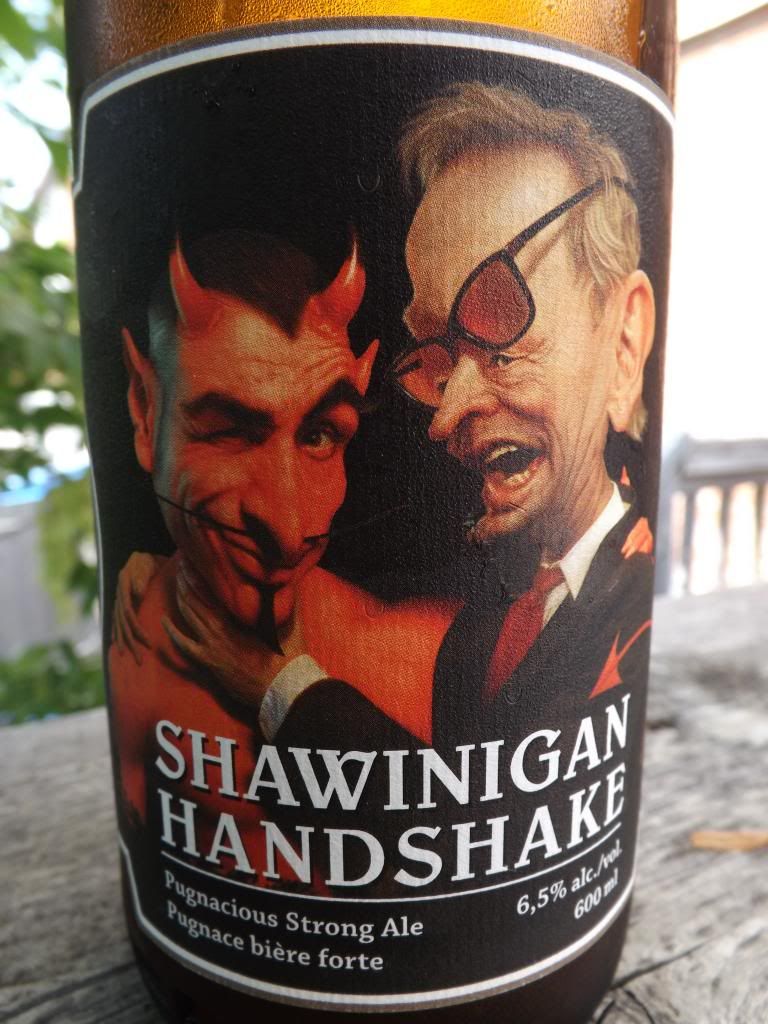
For those who have no freaking idea what I am talking about, 'The Shawinigan Handshake' was one of many batshit insane/hilarious moments from the lengthy Prime Ministership of Shawinigan-born Jean Chretien.  Wikipedia can tell you the rest, but basically what happened was during a Flag Day celebration in the middle of nutshrivelingly-cold February 1996, an anti-poverty protester named Bill Clennett got a little too close to Chretien, and in decidedly un-Canadian fashion, instead of apologizing to Clennett in our Two Official Languages, Chretien grabbed him around the throat and tossed him out of the way, breaking one of Clennett's teeth in the process.  Here's a video of the incident, which soon after became known as the Shawinigan Handshake.  The Opposition, scant though it was back then, had a field day with this, calling Chretien the 'Shawinigan Strangler', but although charges were filed against Chretien they were ultimately dismissed.  Chretien survived the incident quite well, winning the next two elections handily.

In honour of this bizarre incident in Canadian politics, Shawinigan brewer Le Trou du Diable has released a strong wheat lager - a weizenbock - that has recently made its way into Ontario.   Le Trou du Diable, or "The Devil's Hole" (named after a large cave structure in Quebec) is known for having some interesting, and in true Quebec microbrewery fashion, devil-inspired brews.  Last year, a few Trou brews made their debut on draught in select Ontario bars, and shortly after that their first bottled release - La Buteuse - found its way onto LCBO shelves.   This next offering promises to be a tasty journey into a goofy moment in Canadian history.  (Apparently, Chretien himself approved the beer's label!)
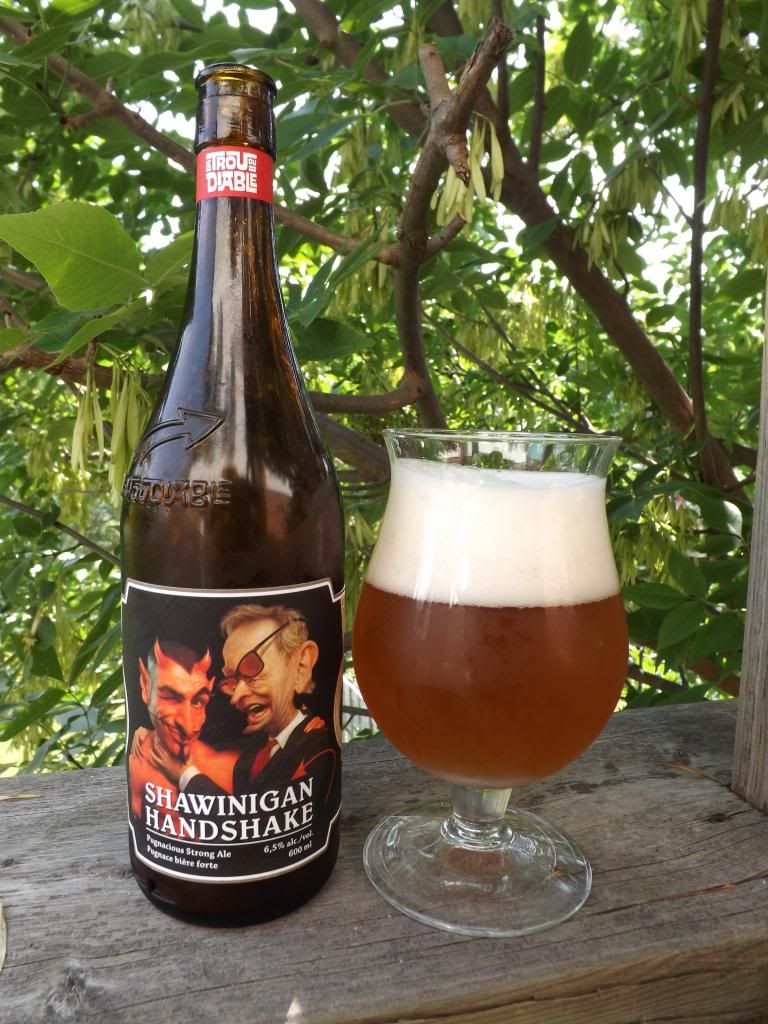
Poured into my stalwart glassed champion, the Duvel tulip.  Always a good choice if I'm not exactly sure of what glassware to use for a particular beer.  A hazy, marmalade-grapefruit concoction flows forth, which yields an impressive head of a couple of inches that survives quite nicely as a thick ring with scads of lacing.  A terrific looking brew.

Nose is banana, grapefruit, clove, other citrussy things, and a malt that for some reason is unmistakably Quebecois.  I'm not sure what it is, but I detect this smell in a great deal of Quebec brews - it's not a bad thing, of course, but it is curious.

This beer offers a Chretien-sized dosage of bitter grapefruit, citrus hops, a bit of resin, alongside a mild foundation of banana, cloves, bread and honey - more typical suspects for a weizenbock.  Nicely spicy, with notes of pepper and clove.  Excellent body to this beer: nice and thick, creamy, and refreshing carbonation.

A very tasty brew indeed, almost like a wheat beer with a bit of American hops.  Though it seems like an odd combination, it somehow works quite well.   (Grade: A-)

Beer: Mikkeller Canadian Dream
Brewery: Mikkeller (Denmark, but really wherever he feels like brewing*)
Type: Czech Pilsner
ABV: 4.6%

*Yeah, so what the hell am I getting at here?   So brewing is an expensive business, and it can take a while to get the capital (and location) to set up a great brewery.  Some folks have recently eschewed this idea, and instead got themselves into the so-called 'gypsy brewing' game.  Basically, these brewers have no permanent home; instead, they avail themselves the use of the facilities of other breweries for a fee (and probably for a cut of the beer).  Rent-a-brewery, you might say.  One of my favorite breweries that does this is Pretty Things Beer Ale Project, who brew some lovely ales (I've reviewed Jack D'Or on the blog before) using the facilities at Buzzard Bay Brewery to get their job done.   On the plus side, this is certainly cheaper than setting up your own brewery; it also allows for some pretty cool brewing collaboration ideas to flourish.  However, it is not a permanent home, and if the home brewery needs to use up all the facilities for their purposes, you are a bit out of luck.

Or, you could do what Danish brewery Mikkel Borg Bjergso of Mikkeller does, and take your show on the road.  Over the past seven years, Mikkel has brewed his unique creations at over 200 different breweries, all over Europe and the United States.  Mikkeller is a much sought-after gypsy brewery, and their products have a surprisingly massive availability.

This brew here is called "Canadian Dream", and was recently released in the LCBO, though I am sad to say it is not an original brew for the Great White North, but rather a repackaged variation of Mikkeller's original Danish Dream, which gets a relabeling and renaming based on whatever country it is sold in (there's also an American Dream as well - same deal).  I'm fairly certain that the fellow on the label is a stylized version of the brewmaster himself, which appears regularly on the Mikkeller website and looks like something out of a textbook of Victorian who's who.

Poured into that same Duvel tulip - it just felt right for the beer at hand, even though a stein or fluted pilsner glass would have been just as good.
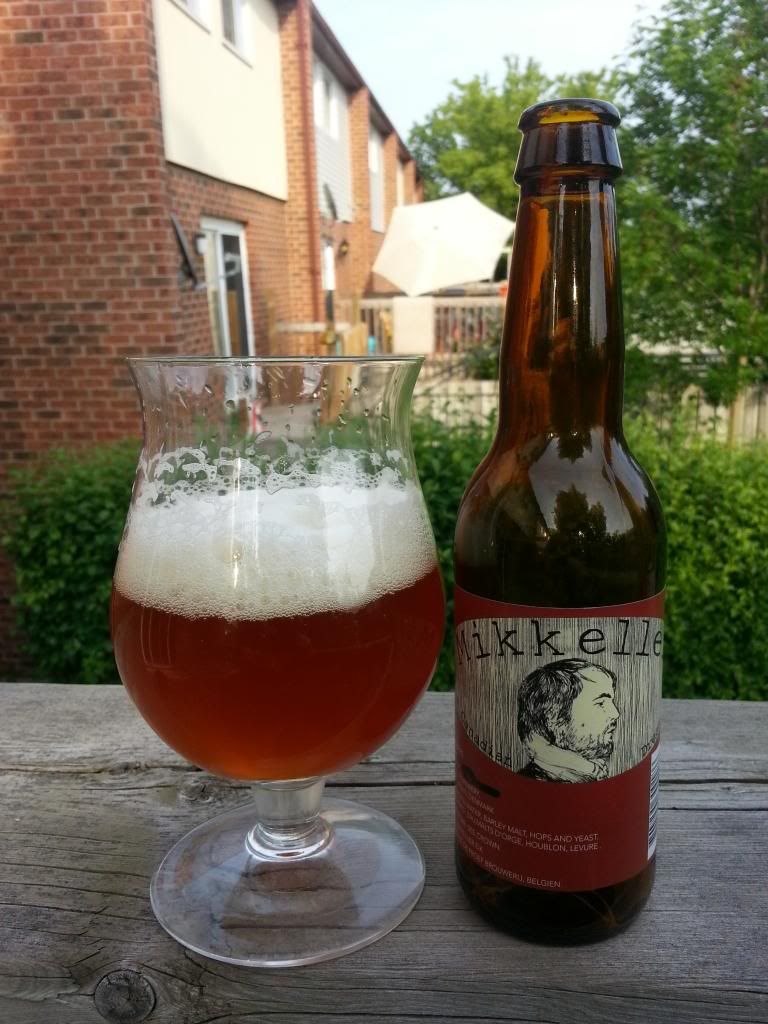
Darker than your typical pils, a sort of tawny copper brew with an inch of fluffy foam that dissolves into a substantial layer with lots of lacing.  Nice looking brew, though not your standard looking, crisp clear golden pilsner.

Nose is noble hop, good grainy component, with a malty sweetness.  Floral notes and honey as well.

Tasty variation on the pilsner theme with some nice sweet cracker and biscuit, honey and floral hops to start things off, then a long bitter hop finish.  Very nice, good assertive punch of hops to the finish which lingers long after each sip.

Thicker bodied, a bit sticky, nice creamy carbonation.  Nice sipping brew.

A highly enjoyable, unique take on the pilsner style.  Not the bright, crisp and clean brew that made Bohemia famous, however, but still a satisfactorily bitter, flavorful brew.  (Grade: B+)

Couple of nice brews to usher in the summer and enjoy over the long weekend.  Check 'em out if you see 'em.  Something a little different for your Canada Day drinking, but still well within the weekends' theme.

Happy Canada Day, everyone!


Friday, May 24, 2013

Oi, lookit! Hurr's a froot ale ferra Summer's day, Burr-aye!

A great beer can take you places you never expected to go, or it can take you to a place that feels so familiar and comforting that the very act of drinking it becomes a sort of communion with the wonderful world of memory.  With the smell and first sip, our minds race back to a treasured moment in our lives: a great hefeweizen can transport the drinker to a German biergarten or summer cottage party; a rich barleywine can place you in your most comfortable chair while the tinsel and lights of the Christmas tree twinkle in front of you; while a metallic sip from a slightly warm can of pilsner feels like sharing that first taste of beer with your dad.  Beer has that kind of power, and the sheer number of varieties of beer available to us means for even greater possibilities for our imagination.

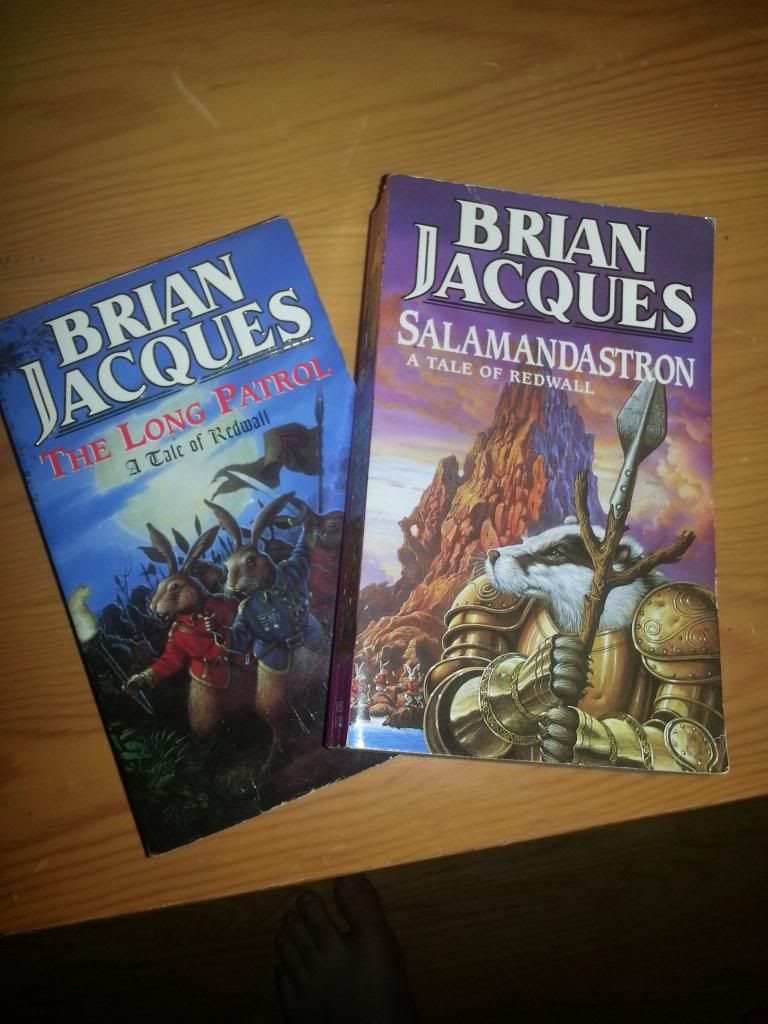
I have spoken before of the kinds of experiences that I have had with beer, as well as some that have become a sort of Platonic Ideal for an experience that hasn't happened yet, be it the perfect pint of pub ale in a dank, cozy English tavern, or raw earthy glass of farmhouse ale in the French countryside, or perhaps a nip of something straight out of a hobbit's cellar, to be enjoyed on a warm spring's day in the Shire.  But another such image that I have in my mind, which so far has not yet come to pass, comes from the world of wolves, stoats, rabbits and squirrels, badgers, mice and shrews.  A world of great feasting, with soups, stews, biscuits, and Turnip n' Tater n' Beetroot Pie.  The world of Brian Jacques and his fantastic creation, Redwall.

A couple of the less dog-eared Jacques books...
and my foot.
I started reading the late Brian Jacques' books in around third grade, and instantly fell in love with his amazing world filled with its wide variety of woodland creatures, each with their own accents, traits and histories.  I started with Martin the Warrior and was immediately hooked.  In this pseudo-Medieval English landscape of dales, thickets, forests and cliffs, the good animals of the world (the mice, badgers and hares, to name a few) were under threat from the villainous ambitions of Badrang the Tyrant, Cluny the Scourge,  Tramun Clogg, Slagar the Cruel, and their forces of stoats, weasels, rats and pine martens.  But the one place of refuge in this brutish and short life is the thick walls and generous hospitality of Redwall Abbey, deep in the heart of Mossflower Wood.  Founded by the legendary Martin the Warrior himself, the Abbey is a sort of monastic fantasy world, guarded by the gentle and benevolent Abbots and their brethren of cooks, scholars, fishermen and hunters who help to make Redwall thrive against the seas of chaos.  It is a place of peace, whose doors are open for all who require them.

But there is one thing that truly set Redwall, and indeed Jacques' novels, apart from the rest, and that is the food.

No description of Jacques' work can ever be complete without a consideration of the wonderful feasts he describes, because the animals who dwell in Redwall Abbey have some of the most delectable, enticing meals ever put to paper.  Whether it be in honour of Midsummers Eve or the beginning of the harvest, or indeed just another Tuesday, these animals put together the most magnificent spreads imaginable, such as this one from Taggerung:  "It was a feast to remember, happiness and friendship enhanced by the best of Redwall fare.  Puddings, pies, pasties and cakes were arranged between fruit, berries and nuts, both fresh and preserved in honey from last autumn's harvest. Salads, breads and soups of every variety jostled for position with trifles and flans...We made a new yellow cheese and spiked it with nuts, celery and herbs, then we soaked it for three days in boiling carrot and dandelion juice mixed with pale cider."   You get the idea.  No wonder this stuff has inspired whole websites that are devoted to replicating these magical recipes.

Of course, as I read them today (and I still occasionally do) what interests adult me much more so than adolescent me are the wines, cordials and summer ales with which the animals wash down their feasts.  Elderberry cordial and dandelion ale and strawberry fizzes galore, all of which sound incredibly delicious.  I think this is why, despite my oft-proclaimed love of roasted stouts and bitter India pales, I still have deep-down a love for a well-made fruit beer, even the ridiculously sweet ones.   So when I see a brew such as the one today, my heart leaps with anticipation.  Even the label looks like something straight out of Mossflower.


Beer: Forest Fruits
Brewery: Wychwood Brewery (Oxfordshire, UK)
Type: Fruit Beer
ABV: 4.2%

Wychwood - of Hobgoblin, Fiddlers' Elbow and Goliath fame - is one of those breweries that seems to aim for that traditional, fantastical England motif with every label design, and this one is of course no different.    It looks like the sort of berry patch Brother Alf would gather fruit to accompany his candied chestnuts.  Will the product within live up to such lofty standards as his?

Poured into a nonic glass.  Bright golden with a slight strawberry haze to it, with a great deal of carbonation and minimal head.

Nose is certainly fruity, that much is sure, but it smells more artificial, like strawberry syrup or something to that effect.  Strawberry and blackberry are the dominant fruits here.

More like a cider, this brew is extremely sweet and fruity - overpoweringly so.  I don't mind it so much, probably for the reasons I described above, but I can't say that this brew would find itself among the pantheon of great fruit beers that are out there.  There is an artificialness to the flavour that I'm not really digging, and the finish is essentially pure sugar.  The carbonation is, unfortunately, lower than a brew like this needs to be to avoid becoming cloyingly sweet.   I wish I could say that this brew tasted more beer-like than a glass of sweet strawberry juice, but that's just what I'm seeing here.  Pity.

Unfortunately, I can't say the brew quite lives up to the lofty expectations I had generated for myself in the (long) lead up to the review.  But these are the sorts of thoughts which keep me questing through heath and heather, valley and dale to find ever more marvelous ales and lagers.  Somewhere out there is a wonderful fruit ale that will immediately take me to a front row seat at the heavily-laden tables of Redwall Abbey, among good friends and great company, with a glass of sweet lemon cordial and some mushrooms with dill butter sauce, candied chestnuts, blackcurrant tarts - and, of course, a generous helping of Turnip n' Tater n' Beetroot Pie.  Someday, I am sure to find it.

In the meantime, perhaps tonight I will curl up in bed with another Redwall adventure - and perhaps a morsel of something tasty to keep me going while I read about yet another magnificent feast...

Sunday, May 19, 2013

Hot Town, Summer Drinkin' in the City!

It's technically not summer yet, but it might as well be.

Like a slumbering bear that finally emerges from its winter den, we Canadians - who have been trapped indoors after an exceptionally long winter - have collectively stepped out into the bright sunshine and have started bringing out all the summer trimmings, and in the process bypassing the season of spring entirely.  Lawn mowers are roaring, patios are opening across the city, every conceivable bicycle-skateboard-scooter-like contraption has been taken out of storage and ridden by the neighborhood children.  And, due to this country's well-placed May holiday, the firecrackers are a-crackling, and probably will be a-crackling nightly from now until Labour Day.  It's a cold country, and we don't get out much, but when we do, we do it right.

That is, of course until it gets so bloody hot that we have to stay indoors again.

So for now, while it's that wonderful zone of hot where it is not overbearing and still a bit of a novelty, it's time to get outdoors and enjoy it.   Or, in my case, sit inside and work on a beer blog entry.  The things I (eventually) do for your people.

Given the fact that the "May 2-4" weekend is, for all intents and purposes the official first days of summer, it's particularly hot and sunny, and the fact that the mighty Arsenal has completed a miraculous second half of the season to perch proudly and arrogantly over Tottenham in the standings (Happy St. Totteringham's Day, you Gunners!), I'm in a festive mood.   Fortunately, my fridge is well-stocked with wheat ales that, coincidentally, happen to have the word "Summer" contained within (I'm not just aiming for those tantalizing Untappd badges, though that is a factor).

So let's have at them!

Beer: Samuel Adams Summer Ale
Brewery: Sam Adams/Boston Brewing Company
Type: American Pale Wheat Ale
ABV: 5.3%

I'm fairly certain that this brew now completes my Sam Adams Seasonally-Named collection, alongside the Spring Lager, Winter Lager and their Harvest Pumpkin.  Like collecting all the Elemental Legendary Bird Pokemon, if you will.  I'll call this one Zapdos.  

In Ontario, we seem to be in the midst of a Samuel Adams invasion, as this brew joins the ranks of the classic Boston Lager, Latitude 48 IPA, the remaining Spring Lager, and a small release of the $115 Utopias Strong Ale, which apparently sold out almost immediately.   Far, far too rich for my tastes.  But this comes alongside a sort of LCBO glasnost, in which we have seen more and more American craft brews are made available in the province, such as Founders and Goose Island.  Ontario's a massive market, let's be honest. Sam Adams has been around here the longest, and though many of these beers have been here before - including the Summer Ale, which I had back in 2010 - this is by far the most Sam Adams beers at one time I've seen in this province.  So how does the summer edition stack up?

Poured into my Founders nonic, in honor of the recent American Beer Invasion.  Light golden straw, mildly hazy, and with some vigorous carbonation that might be the result of a less-than-standard glass washing on my part.  Head is thin and frothy, doesn't last for too long.

Nose is classic pale wheat, with some lemon and orangepeel.  Seems to be about it, but it's not too shabby on this hot 'summer's' day.

A bit more body to it than a lot of pale wheat ales that I've had recently, but still pretty one dimensional.  A mild wheat ale body with some lemon and orange, and a bit of malty sweetness.  Maybe a bit of vanilla and herbal hops.  Thinner bodied, moderate-to-zippy carbonation.

Well, it's citrussy and it goes down remarkably quickly, so chock this one up as a decent summer thirst quencher, though in typical Ontario fashion its quite pricey (over $13 for the sixpack).   Still, it'll work for the weekend ahead.  (Grade: B-)

Now to something a bit closer to home!

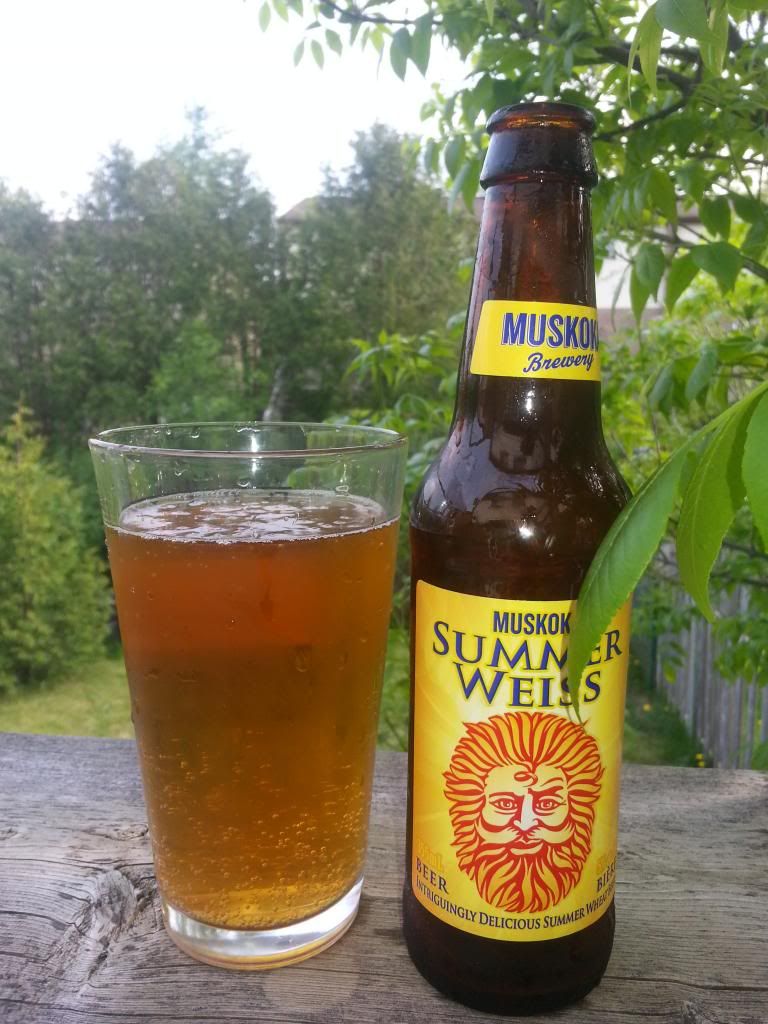
Beer: Muskoka Summer Weiss
Brewery: Muskoka (Gravenhurst, ON)
Type: Hefeweizen
ABV: 5%

Before you long-time readers (if any) get all up in arms over the fact that I've reviewed this brew before way back in 2011, there is a reason for checking in on this brew.  When it first was released in the LCBO, the brew came in a lovely 750mL corked bottle; the brew inside was a lovely unfiltered hefeweizen.   Now, however, Muskoka has had a pretty good couple of years - with the popularity of its Mad Tom IPA helping quite a bit in that regard - which has allowed the brewery to change some of their brews from limited seasonal offerings to regularly available, six-pack fare.  So now, the Summer Weiss is back in a bright new label redesign and is housed in a six pack, and so I'm curious as to whether the brew has changed at all since its original release.

First think I notice right of the bat is the colour - sure looks like the brew has been filtered, much more so than before.  Normally I much prefer the unfiltered hefeweizens, but I'm certainly open to interpretations of the style.   Very clear orange golden colour, with a thin crown of foam that quickly settles into some islands of lace.

Nose is similar to the Summer Ale, except with a pronounced breadiness.  Citrus is here as well in the form of lemon zest and orange peel.

Tasty brew that has more of a malt profile than others of the style, giving it a bit of heft.  Refreshing and citrussy, though not nearly as complex and fulfilling as the previous incantation, though this could also be the difference in two years of drinking.   It's not a bad summer brew at any rate, and goes down extremely well on a toasty Sunday evening such as this.  (Grade: B)

Summer is certainly wheat beer season, and there's lots to choose from.  When it's hot and sticky out, there's really no alternative for a thirst-quencher; I tend to drink them almost exclusively in the summer months - at least when I'm getting some serious beer drinking done - and so variety is certainly a good thing.  Whatever you choose to drink this Long Weekend, I wish you happy drinking!

Cheers to summer beers!

Sunday, April 21, 2013

Brasserie Dupont Roundup Part Deux - Saison Dupont!

So, apparently, I dun goofed.

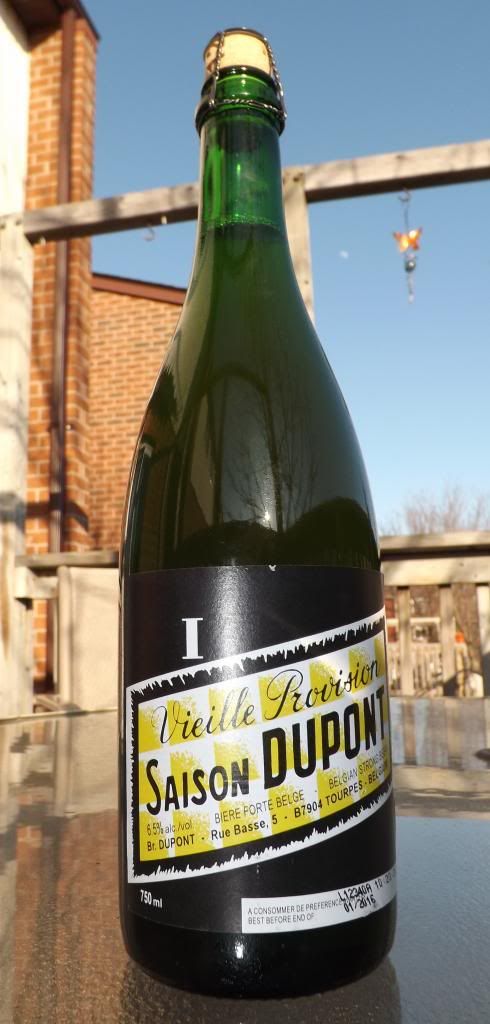
In my excitement to bring you the latest from the Brasserie Dupont release, I neglected to check the release information for any future brews coming our way.  My bad.  And, sure enough, the one brew I was most excited to see - the legendary Saison Dupont - was the last minute entrant in the race, having just filled out his racing card and paid their registration fee with seconds to spare.   Suffice to say, I was incredibly excited to see this brew on the shelves.  What's more, instead of those small 330CL bottles that the previous three were shipped in, the Saison comes our way in a handsome corked 750mL bottle - looking very much like a bottle of vintage wine.  

So consider this an addendum to the previous post and the true cap to the Dupont release.  While I can't say that the previous three brews hit the mark for me, this brew is the one that is truly memorable - it is absolutely one of the very best of the style.   Though I encourage you to give the whole Dupont lineup a try, the Saison is definitely the one that has Matt's Beer Den Guarantee* (guarantee void in Tennessee).

Trust me - this brew is awesome.

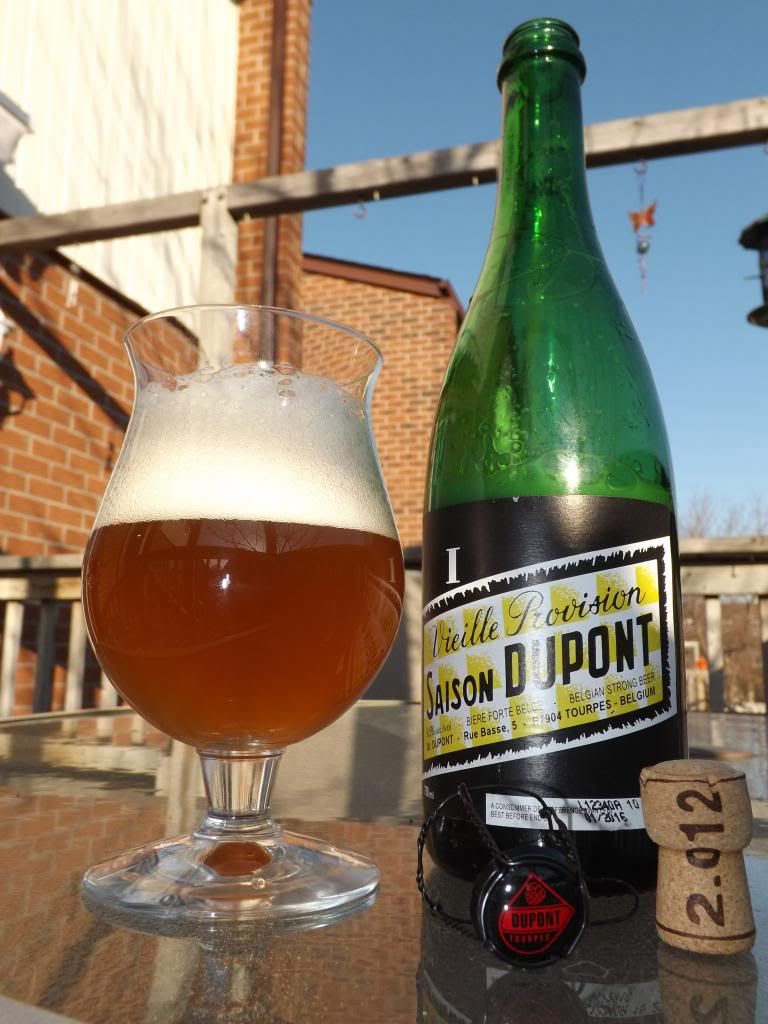
Beer: Saison Dupont
Brewery: Brasserie Dupont (Tourpes, Belgium)
Type: Saison/Farmhouse Ale
ABV: 6.5%

Before I get started, some sad news to report.  Last week, while organizing the substantial pile of dishes on my counter into a more manageable pile for washing, a Rube Goldberg chain of events led to an unspeakable tragedy - the shattering of my beloved, wonderful Duvel tulip glass.  After all the swearing and yelling, all I could do was mourn the passing of my favorite glass.  I've said this before, and I'll say it again - if I were to make a Desert Island Discs selection for the one glass I would take with me on my beer-related travels, the answer would be Duvel.  It is both aesthetically pleasing and structurally unique, one of the most recognizable glasses in all of beerdom.  Its wide bowl allows for the brew to be swirled and contemplated; the narrowing crown of the glass encourages the formation of a sturdy head, and the outward unfurling lip makes for some quality, spill free sipping.  Almost every style of beer can be served well in this glass, and they all look splendid.  For my purposes as well, the design of the glass has another benefit, as its relatively small "Duvel" label is both small and low enough so that it easily can be hidden when sampling other beers (I try not to show the glass's brand label unless the beer happens to be made by that brewery).  

This glass has seen it all: Westvleteren 8 and 12, Ten Fidy, Orval, Peche Mortel, Oak Aged Yeti, and all the other fantastic brews of the past three years.  Sad as I was, my grief was mercifully short-lived, as fortune would have it that my friend was able to acquire me a shiny new Duvel glass, and I could not be more excited to have the old tulip back in the bar cupboard!   Cheers Brad!  And welcome, new Duvel glass - may you be ever filled with wonderful, delicious brews!

RIP Old Duvel Glass (2009-2013)...

On to the Saison, which is looking simply fantastic in the tulip glass.


Husky, grainy in colour - a hazy tawny golden brew, that sports a billowing head of about two inches that settles into a thick ring with a ton of lacing.  Pitch perfect.

Nose has definitely got that farmyard smell.  I know that probably sounds awful, but think of it more like strolling through the barley fields and glens of The Shire. Nice grain husk, lemon, herbs, a touch of sugar, and a muskiness that is quite enjoyable.  

This kind of brew has exactly the dryness and complexity that I like in a Belgian ale.  Not overly sweet, boozy or yeasty either.  Just a fantastic brew.  The citrus is so well done that it tastes like someone has squeezed a fresh lemon in the glass.  Grainy, husky background with herbs and spices.  Again, there's hardly a taste of yeast to be found.   I could drink this beer all summer long and not get tired of it.  

Carbonation is mild and enjoyable, and the beer is light and airy.  A pleasure to drink.

Simply put: there's a reason why Saison Dupont is considered one of the world's finest brews; as a saison, it is a true exemplar of the style.  Light, fresh, citrussy and funky, it's a great spring or summer brew.  And at about $7 bucks, it's not an expensive pickup.   Definitely check it out.  (Grade: A+)


Saturday, April 20, 2013

Brewery Roundup - Brasserie Dupont

For the first time in what has felt like ages, I went to the LCBO and returned with an actual haul.   As in, almost a box full of new beers.  There were almost more new beers for me to buy than I was quite willing to get, but I went ahead with it anyway.  Chock this one up to some pretty good timing on my part - the store I checked out had apparently got all of their Spring Release brews in one afternoon, and about an hour after they finished the display, I showed up.  Having a slate of new beers is a rare treat that usually only happens with a fortuitous trade or a trip across the border, so I'll certainly enjoy this one.

In addition to some IPAs from New Zealand and Italy and a smattering of Belgian brews, we had ourselves a whole brewery release from Brasserie Dupont, brewer of one of the all time great beers - Saison Dupont, a light refreshing farmhouse ale that is a true exemplar of the style.  Unfortunately, the saison is not a part of this release - at least not that I can tell - but this trio does look particularly interesting.  Always like to try new stuff, especially if its from a brewery that tends to have one brew that overshadows the rest of the lineup.  Three brews make up this release, and they are quite diverse in their makeup - a Belgian/English stout, a honey pale ale, and a classic strong brown ale.  Let's get started.


Beer: Monk's Stout
Type: English Stout (according to BA, though I'd call it a 'Belgian Stout')
ABV: 5.2%

This brew had all the indications that it would be a good beer.  And by that I mean it came from a reputable brewery and the bottle looks kind of nice.  But it wasn't, and I have to say I was pretty let down by this.

Poured into a Leffe goblet.  Dark caramel chocolate in colour, with about a half inc
h of fluffy head that settles into a very thin ring.  Some not overly pleasant flakes of sediment swirl around the glass before finally settling.    Not the most attractive brew out there.

Nose isn't bad - dry roasted grain, a bit of fruit - cherry or strawberry - with a mild sweetness and a hint of Belgian yeast.  Smells like a Belgian dark ale, which is more or less what I had expected.

But boy does it not taste like one.  Extremely dry, tart, almost citric, which utterly dominates the brew, leaving little else for the taste buds to detect.   It was okay for the first few sips or so, but man the finish really drags on.  Very, very dry with a Belgian yeast component.   Mouthfeel is certainly of the Belgian variety, and is lighter bodied and a bit slick.

It was intended to be a British-Belgian stout hybrid (I think), but the end result was certainly far less than the sum of its parts.  Not a fan of this brew at all, which is a shame, as I was really looking forward to this.  Don't think I'll be drinking this again.

 (Grade: C+)

Rough start indeed.  Hopefully this next one will bring up the average.


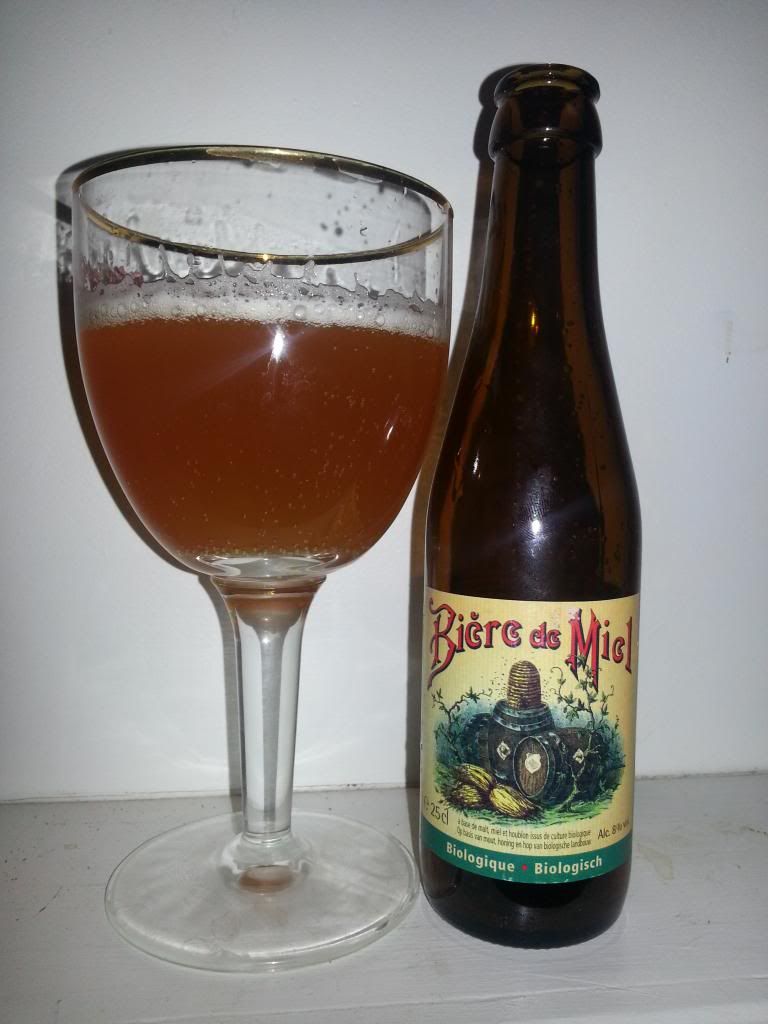
Beer: Biere de Miel Biologique
Type: Saison
ABV: 8%

According to the brewery, this was one of the old Dupont brewery's recipes, but it went into decline and wasn't brewed for most of the 20th century, until it was re-released in 1997.  To honour the original recipe, the beer's label is the same as the original brew.   The "biologique" referes to the organic honey added to the recipe.

Poured into an Affligem goblet, just to mix things up, see if it yields a better result.  Light honey-grapefruit in colour, hazy, and with a big half inch of head that receded into a thin ring and some swirls of foam.

Nose is raw honey, honey bread, musk, herbal and floral hops, farmyard grain.

This brew is one of the few that utilizes and specifically features honey that actually tastes of honey, and not just a mild sugary sweetness.  The nice thing about this honey is that it tastes more like a wild, unprocessed honey than something out of a little bear-shaped jar.  This is helped along by a mild musky and herbal hop backing that gives this brew a pastoral flavor.  Despite the honey sweetness, it finishes somewhat dry.

Moderate bodied, mild carbonation, dry to the finish.

I liked this one, although the hops were a little off - the medicinal, herbal hops just didn't quite balance.  Maybe cellaring this brew for a few months will smooth things out.  Still, a beer worth giving a go!  (Grade: B, maybe a B+)

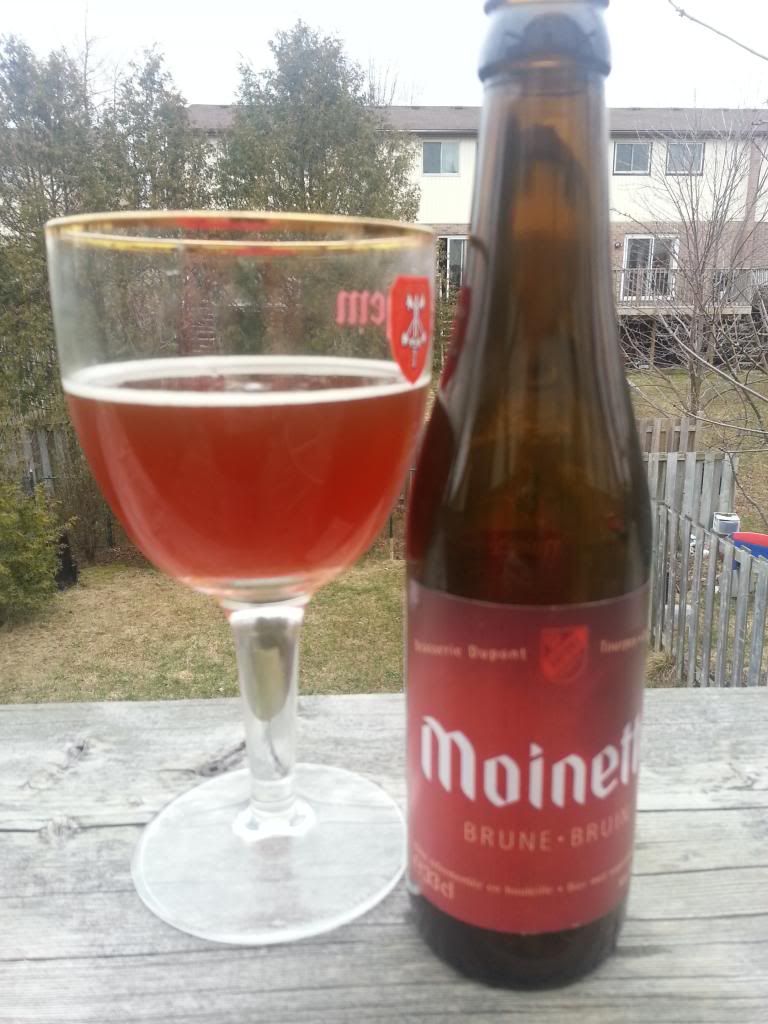
Beer: Moinette Brune
Type: Belgian Strong Brown Ale
ABV: 8.5%

Sorry for the crap photo, not sure why this didn't turn out properly, but for whatever reason my phone forgot to camera.  Looked good on the phone, but when I got it on the computer it was out of focus and just plain sad.

Poured into an Affligem goblet.  Bright caramel brown in colour, with about a half inch of head that recedes into a thin ring.  Nice looking brew.

Nose is very fruity and quite on par for the style - grape, plum, raisin, dates - with spices and a bit of yeast.

I've gone on a bit recently about how Belgian ales are hit an miss for me, and I think this one is one of the types that just isn't doing it for me anymore.  The fruit, spices and bready flavors are all there, but there's that strong yeast component that isn't hitting me right, and the brew is quite boozy.  Carbonation is very sharp and it feels a bit off.   Not sure if this is my own personal preferences or just a less than stellar example of the style, but in either case I wasn't too impressed with this.  (Grade: B-)


Unfortunately, none of these brews really impressed me in the way that the Saison Dupont did, which I guess makes some sense.  Since Belgian ales are so hit and miss for me, I'm less likely to be blown away by the ones I do run into, unless they happen to be of the styles I really enjoy, like saisons, krieks or a nice dry tripel.  Saison Dupont is among the finest of its class, so now all the other brews in the Dupont lineup have that much more work cut out for them in order to stand out.   The nice thing about when the LCBO gets these brews in is that the price is quite reasonable, so no matter my views on the beer, it's not too much out of your pocket to give them a try and see for yourself.

Saturday, March 23, 2013

Cookin' with Beer! - Beer Bread

One of the many wonderful things about beer is its remarkable diversity; more than any other beverage, beer comes in different tasting varieties, strengths, using different ingredients and methods of brewing.  Consider how foreign a roasty, bitter chocolate oatmeal stout must taste to someone who just finished a Belgian Wit, or sour lambic, pilsner or India Pale.  You just can't get that kind of variance in spirits - hell, not even with wine.  This quality makes beer a natural accompaniment with food, whether as the chosen beverage for the evening, or as part of the cooking process itself.   But wait a minute - isn't this wine's job?  We have whole professions devoted to selecting the perfect wine to accompany a meal (a sommelier), and our cookbooks are full of instructions to add wine - to flambe, to steam, or to make a sauce.  Don't get me wrong: a nice bottle of wine is a great thing to share over dinner, and some recipes really deserve wine as one of their ingredients.  But if Garrett Oliver - brewmaster at Brooklyn Brewery and author of The Brewmaster's Table - has anything to say about it, we'd be using beer as part of our culinary lives a great deal more.

It's a fantastic book, which takes you through the history of beer and brewing, with a healthy stop at each of the major styles, exploring the details of what makes each style unique.  But Oliver's main mission is to explain how we can pair our daily meals with an appropriate malty beverage.  And he pulls no punches here with his assault on wine and its hegemonic position as the chosen drink of choice, claiming that wine is "no substitute" for beer when it comes to cleansing the palate and bringing out the best of both components of the meal.  Beer also doesn't have as many challenges with so-called "difficult ingredients", ones that even the best connoisseurs will have trouble pairing with wine.  Finally, for those concerned about the thickness of their waist and their wallets, beer is relatively low in calories and usually cheaper than wine (you'd be hard-pressed to find a beer over twenty dollars; not so with a vintage wine).   So how should we pair beer with food?  I won't go into too much detail (it's better if you check out the book yourself), but Oliver suggests pairing using a "like-to-like" rule.  If your food is brown and hearty (say, a stew or hamburger), go with an amber lager, or for heavier fare, a brown ale.  Lighter fare, like brunch or seafood, would do better with a pale lager or wheat beer.  It's all about balance.

So we've talked about pairing beer with food, but what about cooking with beer itself?  There's an incredible world of beer-centred recipes out there; all you have to do is explore, but to give you a few examples, beer is excellent for:
- braising meat
- sauces
- stews
- soup or broth bases
- chili
- desserts (especially with fruit beers or chocolate stouts)
These are just a few basics; there's all sorts of crazy recipes with beer involved out there (beer dumplings anyone?) that are probably pretty damned tasty - I haven't tried them all.  But something I'm hoping to do around the den is try out some of these recipes and see how they work; a little something to add to the diversity of the site so that it doesn't become so review-centric (which I've noticed has been a trend recently).

Let's start with the simplest, most basic recipe you can do with beer - and one that really hearkens back to the earliest history of our favorite beverage - beer bread.  (Thanks Ned for introducing me to this recipe!)

Beer isn't all that different from bread if you think about it.  Both involve grains (usually wheat or barley), sugars and yeast, carbonation, and cooking time.  But the connection is even closer than that.  Patrick McGovern is the director of biomolecular archaeology at the University of Pennsylvania museum, and is considered to be one of the world's foremost experts in the ancient history of beer and wine.  McGovern uses samples from pottery shards and other archaeological findings to piece together how and when our ancient ancestors first began brewing this remarkable beverage.   As he explains in his Uncorking the Past (2009), the processes used in antiquity for making beer and bread were strikingly similar; Ancient Egyptians, for example, often used the very same vats to either bake their bread or brew their beer.  Sumerian brewers would often use barley 'cakes' either as bread-like nourishment or as the malt base for their brews.  Indeed, there was a healthy debate among archaeologists/anthropologists regarding which foodstuff came first - beer or bread. (McGovern argues neither, opting for the simpler to create mead/honey or wine).  Since ancient times, the link between bread and beer has continued.  We've all heard of Guinness as being referred to as 'liquid bread', a silly comparison considering that Guinness is a low calorie, low alcohol brew.  But beer's chemical similarity to bread has allowed it to be used as a food supplement, particularly for medieval monks, who would often consume beer in lieu of bread during periods of fasting.

Beer bread has another thing going for it, and that's the fact that the beer we add to the batter already has the yeast in it, which means no waiting for hours for the yeast to rise.  Now, the end result is not nearly as fluffy and light as your traditional baked breads, it is nevertheless about the quickest bread you can put together - and it tastes pretty damned good too.  This recipe is remarkably simple, and has the added benefit of being completely customizable, depending on what style of beer you use.  Today, I went with a spare bottle of a Belgian Dark Ale, Biere du Boucannier Dark Ale.  It's a bit smaller than the recommended size of beer (330mL) vs. 375mL), but the end result was just fine.

So how do we make it?*

1) First things first, grab two bottles of beer: one for the bread, and one for yourself.

2) Cheers with someone you love.

3)  Get that oven of yours up to 375C and use some shortening to grease up a bread pan (preferably a 9x5inch one).

4) We start with our dry ingredients.
- 3 cups of all purpose flour (I went with Robin Hood, due to its in-my-pantry-ness.)

- 3 tablespoons of well-packed brown sugar.  I've done this with both light and dark brown sugar and it tasted fine either way.
- 1 tablespoon of Baking powder
- 1 teaspoon of table salt

5) Melt yourself about four or five tablespoons of butter in a ramekin or microwavable bowl and set that aside.

6) Combine all your dry ingredients in a large bowl, and add your beer.  Remember, this is your time to be creative.  Any ol' beer will do, as long as it's around a bottles' worth.   Dump that sumbitch right in there.  Experiment with different flavors and see what you like!  Just pour it right into your dry ingredients and watch that sucker bubble up.

7) Stir well, otherwise you'll get patches of flour in your finished product.  Which is gross.  Stir it up until it turns into a thick, sticky batter with no visible patches of flour.


8) Pour (or if it's that sticky, pick up and toss) your batter into your greased bread pan.  Spread it around so that it's about the same height in all places, but it'll settle on its own.  Now, pour some of that amazing melted butter on top.  I mean douse that batter with it.


9) Toss the whole thing into the oven and bake for about 35 minutes.  Watch an episode of Archer or something.  Grab another beer.

10) When the oven beeps, check the bread's done-ness with a toothpick - it should come out clean.  Let the bread sit about five minutes in its pan to finish baking.


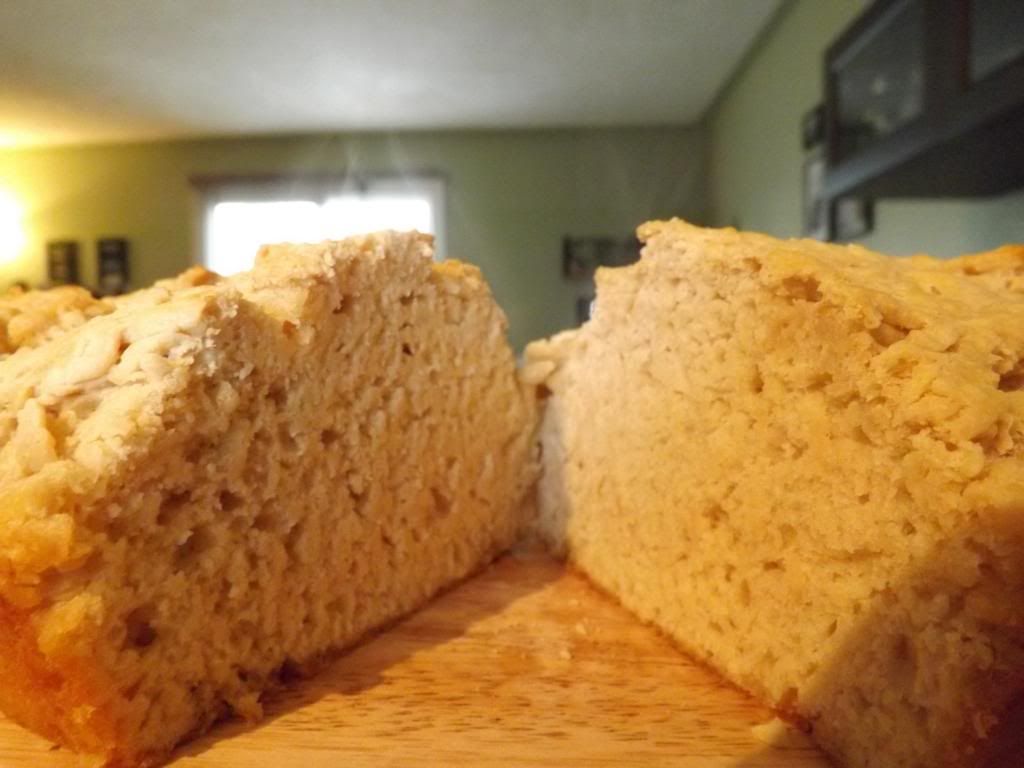
11) Remove from the pan onto a cutting board.  Grab yourself a slice, and slather it up with more butter, or maybe some margarine, or even some corn syrup.  The end result is a delicious sweet, biscuit-like bread that should have some hints of that beer you added.  For today, I noticed some subtle notes of fruit (plum and grape) and Belgian yeast.  Really brings out the character of the beer.

Ohhhh yes.
Want some hops in your bread?  Try it with an IPA, like this one that uses Propeller IPA.  Or maybe a dark chocolate coffee bread with Mill Street Coffee Porter, Young's Chocolate Stout or whatever dark ale you have handy.


Tasty bread that tastes like beer, and it's done in about 35 minutes.  Try it!

Sources used today:

McGovern, Patrick. Uncorking the Past: The Quest for Wine, Beer and Other Alcoholic Beverages. University of California Press: Berkeley, 2009.

Oliver, Garrett.  The Brewmaster's Table: Discovering the Pleasures of Real Beer with Real Food.  HarperCollins: New York, 2003.

*Recipe adapted from:
Williams Sonoma Collection: Bread.  Free Press, 2002.